
Parents see big changes between ages one and five. A child starts speaking more, moving with control, and wanting to do things alone. Montessori taps into that stage with structure that still feels calm and natural.
This matters at home. Daily routines can turn into power struggles. Attention can feel scattered. In a Montessori setting like Bambini Montessori Academy, children practice skills that carry into real life. This article explains how Montessori supports development, what Montessori child development looks like day to day, and the benefits of Montessori education you can notice over time.
How Montessori Supports Development Through Daily Independence
Development shows up in small moments, not grand lessons. Montessori starts there. Children get time, space, and clear expectations. Then they practice the same skills again and again. This section breaks down how that daily rhythm helps children grow.
Practical life builds real skills
Children learn through tasks that feel real. They pour water. They button a sweater. They carry a tray with care. These actions train coordination and steady hands, and children feel proud after they finish.
At Bambini Montessori Academy, practical life work fits the child’s age. Teachers show the steps once. Then children try it. Repetition turns effort into skill.
Choice builds self-control
Montessori gives children choices within limits. A child chooses work from the shelf. A child returns it to its place. That simple loop builds responsibility.
Does choice lead to chaos? No. The classroom design guides choice, and teachers keep the room calm and orderly. Children learn freedom with boundaries, and that supports self-control.
Routine supports calm behavior
Children relax when days feel predictable. Montessori classrooms follow a steady rhythm. Work time stays long enough for focus. Transitions stay simple and respectful.
At home, that can show up as fewer battles. A child learns what comes next. A child learns how to wait. A child learns how to finish.
Montessori Child Development and the Prepared Environment
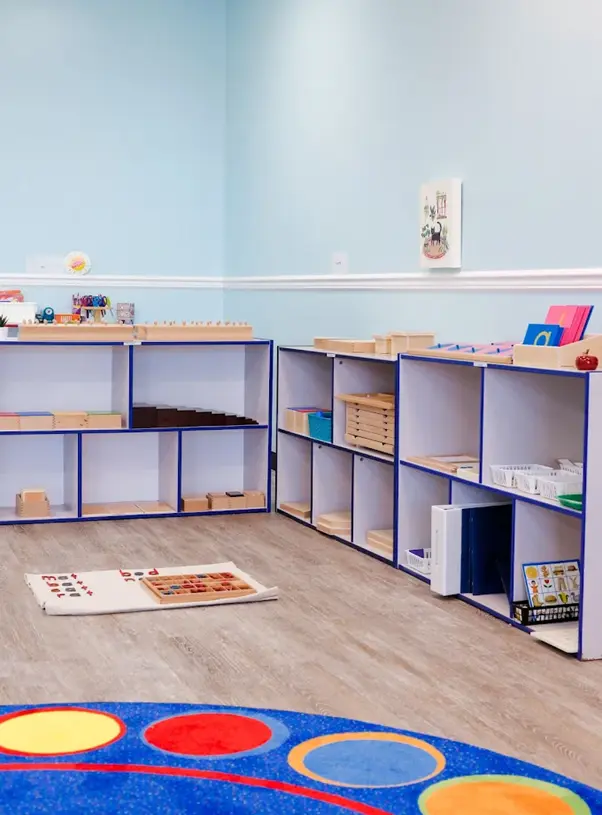
The room teaches as much as the teacher. Montessori spaces stay orderly, clear, and child-sized. Materials sit where children can reach them. Each item has a purpose, and each shelf has a place. This section explains how the environment supports growth across many areas.
Hands-on materials make concepts concrete
Many early skills feel abstract to young children. Montessori materials turn them into something children can touch. A child holds a number rod. A child traces a sandpaper letter. A child matches shapes by sight and feel.
That physical work builds understanding. It supports memory and attention. It gives the child a clear path from “I see it” to “I can do it.”
Order supports focus
Clutter pulls attention in many directions. Montessori classrooms avoid that. Shelves stay tidy. Workspaces stay clear. Teachers protect a child’s concentration during work time.
Children learn to focus in short bursts first. Those bursts grow longer with practice. Montessori child development often shows in that shift. A child sticks with a task. A child repeats it with care. A child finishes and resets the space.
Mixed-age groups support social growth
Many Montessori classrooms group children across a span of ages. Younger children watch older children. Older children help younger children. This creates natural role models.
Children learn patience through real moments. They learn to wait for a turn. They learn to offer help without taking over. That social learning supports confidence and kindness.
Social and Emotional Growth in Montessori Settings
Parents want children who feel secure and capable. Montessori supports that through respectful interaction. Teachers speak calmly. They model manners. They guide conflict with care. This section covers the social and emotional side of Montessori child development.
Respect shows up in daily language
Grace and courtesy is part of Montessori practice. Children learn to greet others. They learn to say “excuse me” and “may I.” Teachers model a calm tone, then children copy it.
At Bambini Montessori Academy, these lessons show up all day. They happen at snack time. They happen during clean-up. They happen when children share space and materials.
Emotional regulation grows through practice
Big emotions show up often in early childhood. Montessori teachers respond with calm voices and clear words. Children learn how to name what they feel and take a moment before reacting.
With time, that steady support turns into resilience. Children bounce back faster. Parents begin to notice more control and less chaos during tough moments.
Community builds empathy
Montessori classrooms work like small communities. Children care for their space. They wipe tables. They water plants. They return materials for the next child.
That shared responsibility builds empathy. Children learn that their actions affect others. That lesson helps at home too.
The Benefits of Montessori Education for Early Learning
Many parents think first about academics. They want children ready for kindergarten. Montessori supports learning skills in a calm, steady way. It avoids pressure. It builds foundations that last. This section explains what that looks like across language, math, and curiosity.
Language develops through sound and touch
Montessori often starts language with sounds. Children hear a sound. Children match it to an object. Children trace letters with their fingers. That links sound, shape, and movement.
Reading does not start with drills. It starts with familiarity. Children build confidence with sounds and letters, then words appear when the child feels ready.
Math starts with quantity, not worksheets
Montessori math work begins with real quantities. Children hold beads. Children build numbers. Children see the difference between one and ten in their hands.
That helps children understand math, not just recite it. They learn what numbers mean. Later, symbols feel less intimidating.
Curiosity stays at the center
Children learn best when interest stays alive. Montessori leaves room for that. A child may spend time on one material. Another child may switch work after a short task. Teachers guide choices based on what they observe.
The benefits of Montessori education often show in attitude. Children enjoy learning. They feel capable. They try new tasks without fear of being wrong.
How Bambini Montessori Academy Supports Families Along the Way
Parents do not just choose a program. Parents choose a partnership. Communication and trust matter. A calm classroom matters, and peace of mind matters too. This section explains how Bambini Montessori Academy supports that family experience.
Consistent communication supports trust
Daily updates help parents feel connected. Many families want to know how the day went. They want photos, meals, and naps recorded. Bambini Montessori Academy uses the Brightwheel app for daily communication.
That helps parents stay in the loop. It supports smooth routines at home. It reduces guesswork.
Safety systems support peace of mind
Safety concerns sit at the top of most parent lists. Bambini Montessori Academy uses controlled access systems and classroom monitoring. Families want to know who enters the building. They want clear rules. They want strong supervision.
That structure helps families relax. It lets children settle in faster, since parents feel confident at drop-off.
Open-door culture supports transparency
Families value transparency. Seeing a classroom once can answer many questions. How do teachers speak to children? How do children move around? How does the room feel?
An open, welcoming culture supports that connection. It shows families what Montessori looks like in real life, not in a brochure.
See How Montessori Supports Development in Your Child
A Montessori classroom feels different once you step inside. Children work with purpose. Teachers guide with calm direction. The room stays orderly, and children move with confidence.
Bambini Montessori Academy welcomes families who want to see Montessori child development up close. A tour gives you a clear picture of daily routines and learning materials. It shows how Montessori supports development in a steady, practical way. Reach out to schedule a visit and talk with the team about your child’s early years.