
Many parents feel unsure about what a Montessori classroom actually looks like during a normal day, and that uncertainty can make choosing early education feel risky. Parents want predictable routines, safe environments, and real learning, but descriptions that rely on jargon or snapshots do not answer practical questions about daily life.
Without a clear picture of daily rhythms, caregivers can imagine either chaotic free-for-all play or overly structured, adult-led lessons that leave little room for independence. That gap between expectation and reality is especially stressful for families who value both developmental progress and dependable caregiving.
This post explains what a Montessori classroom day typically includes, with clear examples of work cycles, teacher roles, materials, family communication, and everyday routines you can expect. The goal is to give a practical, observable view of how Montessori education supports independence, concentration, and social growth in early childhood.
How a Montessori Day Is Structured
A Montessori classroom day is organized around long, predictable work periods that allow children to focus without interruption. Those extended work cycles give children time to choose activities, concentrate, and return to tasks as needed, which supports deep learning and self-regulation. In a typical day you will also see clear arrival and departure routines, brief group moments, snack and rest times, and transitions that respect children’s developmental rhythms.
A standard morning usually begins with a calm arrival where teachers greet children and help them settle into the environment, carrying personal items to their cubbies and choosing a first activity. After a short independent period to acclimate, the classroom moves into the main work cycle when children engage with materials on shelves, practice practical life tasks, and receive individualized lessons. Afternoon periods typically include another focused work cycle, a group or outdoor time, and preparations for departure that help children shift gears without rushing.
Different classroom levels follow these same principles while adapting to age and capacity; infants have caregiving routines built into the day, toddlers get shorter but frequent work and practice opportunities, and Children’s House groups enjoy longer uninterrupted periods. For specific age ranges and program descriptions, see our Montessori Programs to understand how these structures are tailored across classrooms.
What Children Do During Morning Work Cycles
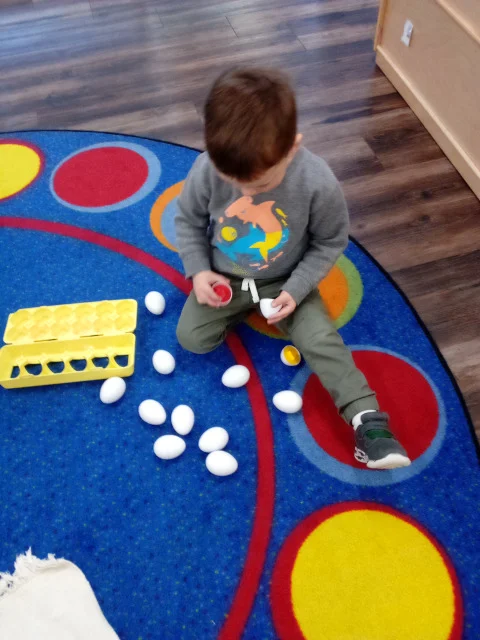
A Montessori classroom begins work cycles with children choosing activities that match their interests and developmental needs. During these periods you will see children selecting tasks from low shelves, working alone or in small groups, and returning materials to their places when finished. The freedom to choose is balanced by clear expectations about respect for materials, other children, and the learning environment.
Materials are intentionally sequenced so that children can progress from simple to more complex activities, practicing skills such as pouring, buttoning, matching, and early math concepts. Teachers present brief, precise lessons to introduce new materials, then step back to observe and support the child as they work. The result is a rhythm where individual concentration and small-group interaction coexist within the same classroom space.
During work cycles teachers may offer short, one-on-one lessons tailored to a child’s current interest, gently redirect a toddler who needs help, or invite a small group into a new activity that builds on prior learning. These teacher-led moments are sparse but purposeful, designed to spark independence rather than replace it.
Montessori classroom environment and materials
A Montessori classroom is arranged with open shelves, natural materials, and clearly defined work areas that invite exploration and order. The layout helps children see all available activities, make choices, and practice returning materials, which teaches responsibility and care for the environment. Furniture and tools are child-sized so that physical independence is supported through everyday tasks.
Materials in a Montessori setting are concrete, self-correcting, and designed to isolate a single concept, such as size, color, quantity, or coordination. Children move from sensorial exploration to language and mathematical ideas through repeated engagement with these materials. Classrooms at Bambini Montessori use authentic Montessori materials alongside carefully organized practical life activities, reflecting Montessori principles in both design and selection of items.
Mixed-age groupings let younger children learn by watching older peers, while older children consolidate knowledge through teaching and leadership opportunities. The classroom environment becomes a community of learners where independence and collaboration are visible in the way children use space and materials over the course of a day.
Role of the Teacher as Guide and Observer
A Montessori teacher acts first as an observer and guide, not primarily as an instructor who leads whole-class lessons continuously. Teachers at all levels watch for the moments when a child is ready for a new lesson, then present that lesson in a concise, clear way and step back to let the child practice. Observation informs individualized plans, enabling teachers to meet each child where they are without interrupting the classroom’s flow.
This role requires detailed knowledge of child development, sensitivity to timing, and the ability to read subtle cues in a child’s concentration and activity choices. Teachers may also model behavior, introduce grace and courtesy exercises, and facilitate conflict resolution between children, reinforcing social skills as part of the daily rhythm. Daily documentation and communication with families help teachers share observations and developmental progress in a meaningful way.
At Bambini Montessori professionals hold Montessori-aligned credentials and follow practices that emphasize respect for the child, careful preparation of the environment, and continuous assessment through observation. For more about the academy, staff, and founding philosophy, see About Our Academy for background on how those principles are reflected in daily classroom life.
Mixed Ages and Social Development
A Montessori classroom supports social development by intentionally grouping children across a two to three year span, giving them regular opportunities to cooperate and lead. Younger children gain models for language, self-help, and complex tasks by observing older peers, while older children practice empathy and reinforce their own learning by assisting others. These natural social roles arise during the typical flow of the day and help develop confidence and leadership.
Conflict resolution and cooperative tasks are woven into daily routines rather than being taught as separate lessons, so children learn to negotiate, wait, and share within authentic contexts. Teachers coach these interactions gently, using real-time situations to teach problem solving and perspective-taking. Over time, children in mixed-age classrooms build sustained friendships and a sense of belonging that supports both emotional and cognitive development.
The social fabric of the classroom also benefits from consistent schedules and shared norms, which create predictability and reduce anxiety. When children know what to expect during the day, they are more likely to engage freely with peers and with materials, turning the classroom into a vibrant learning community.
Meals, Rest, and Practical Life Routines
A Montessori classroom includes practical life routines that teach everyday skills, and these activities are integrated into the daily schedule rather than being added on later. Children are often involved in snack routines, pouring their own water, serving healthy foods, and cleaning up, which builds fine motor control, sequencing skills, and independence. At Bambini Montessori the nut-free environment and healthy snack menu support these practical life lessons while addressing common food-safety concerns.
Rest and nap times are handled with attention to each child’s needs so transitions feel calm and predictable, and teachers use consistent cues to help children move into quiet rest periods. For infants and toddlers, caregiving routines are respect-based and responsive, with staff following individual schedules for feeding, changing, and sleep. These practical routines help children feel secure and contribute to the overall rhythm that supports learning across the day.
Practical life lessons also extend to classroom care, where children learn to return items to their shelves, dust, sweep, and fold, reinforcing responsibility and respect for shared spaces. These small, repeated actions build routines that children carry into other environments outside of the classroom.
Family Communication and Daily Documentation
A typical Montessori classroom includes regular communication with families that preserves privacy and shares meaningful observations rather than only scheduling conferences. Teachers at Bambini Montessori send daily updates and photos through the Brightwheel app so families can see what children are doing, how they slept, and which activities captured their interest. These summaries support continuity between home and school and give parents a window into the developmental progress their children make day to day.
Documentation also includes notes about new lessons given during the week, progress on specific skills, and general social observations, which help families know when to expect new milestones. Consistent communication reduces surprises at pick-up time and invites family input into a child’s learning plan. Security measures such as camera-equipped spaces monitored via the Open Path Security App provide an additional layer of reassurance about safety and staff oversight.
Families who have questions about schedules, curriculum, or classroom routines can consult program materials or reach out through established channels to clarify what an average day looks like. Informational pages and resources can guide parents who are comparing early childhood approaches.
How Montessori Supports Independence and Critical Thinking
A Montessori classroom supports independence by providing choices, predictable routines, and materials that invite repetition and mastery, allowing children to develop confidence through competence. The approach intentionally fosters decision-making and problem solving as children select activities, experiment with materials, and correct their own errors. This process is a foundation for critical thinking because children learn to test ideas, observe results, and refine strategies through hands-on work.
The Montessori Method encourages self-directed learning that promotes self-confidence, independent thought and action, and critical thinking in early childhood development. Teachers scaffold this process by offering lessons at the right moment, withdrawing when a child needs space to explore, and stepping back to reflect with the student after periods of focused work. Over time, this cycle of choice, practice, and reflection cultivates an internal sense of motivation rather than reliance on external rewards.
Children also develop executive function skills such as planning, working memory, and impulse control through consistent routines and progressive challenges embedded in the classroom day. These capacities are central to later academic and social success because they enable children to approach complex tasks with persistence and strategy.
Visits, Orientation, and What to Expect Before Enrollment
A typical orientation for families explains the rhythm of a Montessori classroom, the expectations for child independence, and the ways staff communicate daily progress. Orientations often include a tour of classroom spaces, time to meet teachers, and a review of basic policies such as the nut-free environment and health procedures. Families can learn about fee assistance programs and other supports that may be available for eligible households.
If you want to inquire about tours or scheduling an orientation, the academy’s website lists contact options and a form for arranging visits during available hours. Preparing for a visit by reading program descriptions helps families ask focused questions about age-group routines and classroom dynamics. Orientation conversations also often cover logistical details like arrival and departure routines, nap provisions, and meal practices so families know what to expect on a typical day.
For scheduling details, see the Contact and Tour Scheduling page to find the best way to coordinate a visit that fits your family’s needs.
Related resources for next steps
For more detail, review Bambini Montessori’s Montessori Programs page and its About Our Academy resource before making a final plan. These pages provide additional context about the services and decisions discussed above, while keeping the focus on what applies to your property and priorities.
You can also explore Contact and Tour Scheduling when that aspect of the project affects your situation. For independent background, The Montessori Method encourages self-directed learning that promotes self-confidence, independent thought and action, and critical thinking in early childhood development. offers high-authority educational guidance that supports a careful, informed decision.
Frequently Asked Questions
1. What does a typical Montessori classroom morning look like?
A typical morning at Bambini Montessori in Gambrills, MD begins with arrivals, where children settle and choose an initial activity before the main work cycle. Teachers greet families, record notes in Brightwheel, and offer brief, individualized lessons as needed. The focus is on continuity and calm transitions so children can focus and build concentration.
2. How does the teacher support my child without directing every activity?
Teachers at Bambini Montessori in Gambrills, MD operate as guides who observe, introduce lessons at the child’s developmental moment, and step back to allow independent practice. Staff monitor progress and document development through daily updates so families understand how guidance supports learning. This approach fosters problem solving and confidence while keeping each child’s needs central.
3. Are meals and snacks handled in a Montessori-friendly way?
Yes, Bambini Montessori in Gambrills, MD integrates snack and meal routines into practical life activities where children pour, serve, and clean up, gaining motor and sequencing skills. The academy maintains a nut-free environment and offers a healthy snack menu to support safety and nutrition. Including these routines in the classroom day helps children learn responsibility through real tasks.
4. How do mixed-age classrooms affect social development?
Mixed-age classrooms at Bambini Montessori in Gambrills, MD promote leadership and empathy by allowing younger children to learn from older peers and older children to reinforce their knowledge by helping. Social roles develop naturally through shared activities, and teachers guide conflict resolution when needed. Over time, children gain confidence and cooperative skills that come from sustained social interaction.
Conclusion
Understanding Montessori classroom starts with clear information, realistic priorities, and attention to the details that affect your property. Homeowners in Gambrills, MD can use the points in this guide to compare options, ask better questions, and make a confident next decision.
Bambini Montessori Is Ready to Help in Gambrills, MD
Bambini Montessori welcomes questions about daily classroom rhythms, program options, and how we support early independence and learning in Gambrills, MD. Visit the academy website or use the contact form to request information or schedule a tour through the contact page. Staff can share classroom schedules and describe how routines are adapted to each child’s age and needs.
